

Skip to content
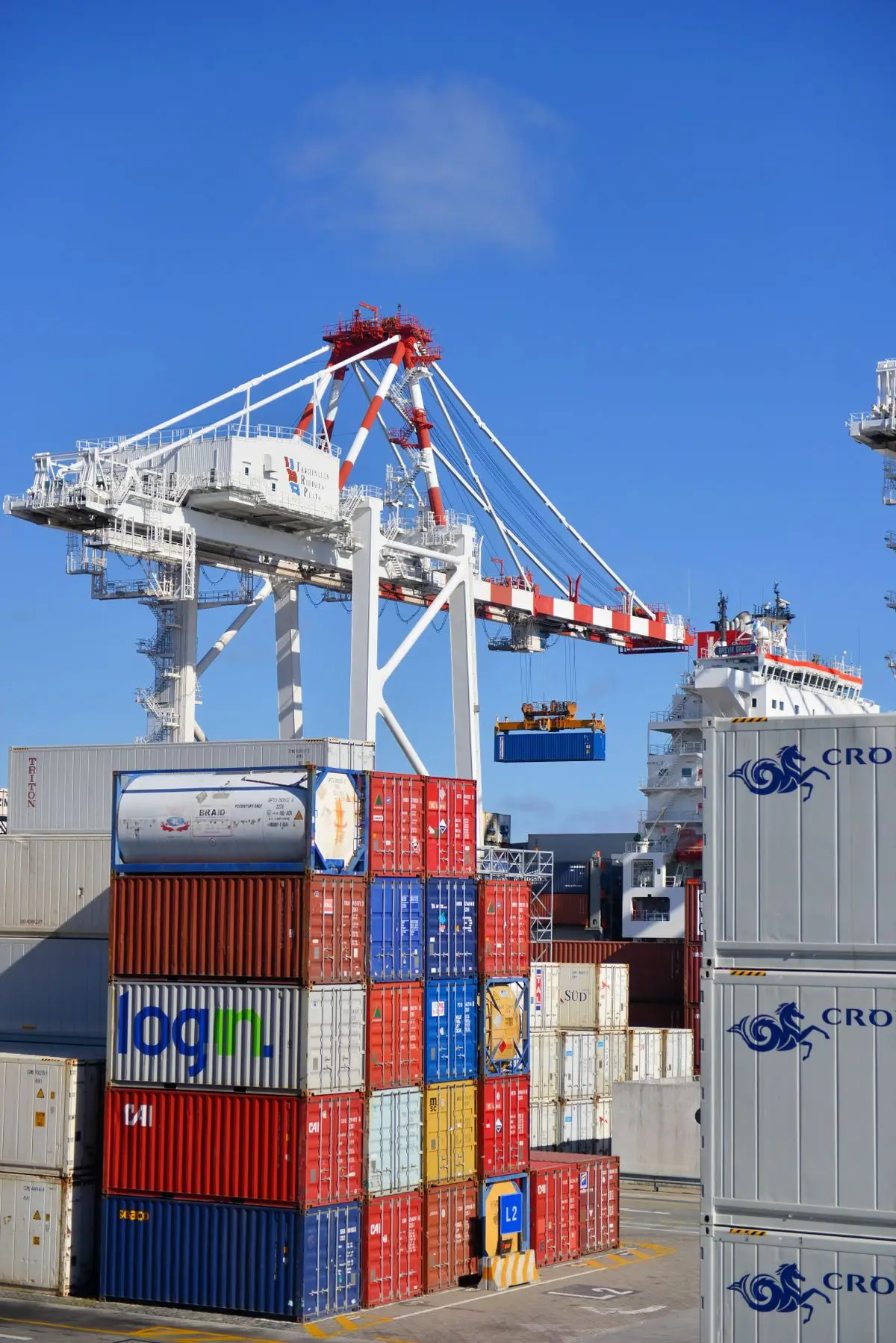
Colorful shipping containers stacked at a busy container port

Specialist freight

Out-of-Gauge & Project Cargo

Out-of-gauge (OOG), heavy-lift and breakbulk cargo that will not travel in a standard container — flat racks, open tops and breakbulk from the UK, planned as a project rather than booked as a box.

When cargo outgrows the container

A standard container has a door aperture a little under 2.4 metres wide and about 2.6 metres high on a high cube. Anything that will not pass through that opening, or that is too heavy for the floor to take, has to travel another way. That is project and breakbulk territory: transformers, presses, tanks, structural steel, boats, turbine sections and production lines that were never designed to be posted.

What makes cargo out-of-gauge

Out-of-gauge describes cargo that sticks out beyond the outline of the container it travels on — over-height on an open top, or over-width or over-length on a flat rack. It is still carried on a container ship, in container slots, which is what separates it from breakbulk, where cargo is lifted loose into the hold. That distinction drives the price. A flat rack that is over-width or over-height stops the carrier using the slots next to or above it, and those lost slots are charged on top of the rate for the rack itself. Cargo that is in-gauge on a flat rack — oversized for a box but within the rack's own footprint — costs much less than cargo that overhangs it.

  • Over-height — above the top of an open top or flat rack
  • Over-width — beyond the sides of a flat rack
  • Over-length — beyond the ends of the equipment
  • Overweight — beyond what the floor or rack is rated for

The equipment options

Out-of-gauge cargo is matched to equipment rather than the other way round, and the choice drives both the price and the schedule — specialist equipment is a finite pool and it is not available at every port on every sailing.

  • Flat rack — no sides or roof, for over-width loads
  • Open top — removable roof, for crane-loaded cargo
  • Platform — deck only, for the largest bases
  • Breakbulk — loaded loose into the vessel's hold
  • Heavy-lift vessels with onboard cranes
  • Multiple containers for cargo that can be split

Planning is the service

On a project shipment the freight rate is rarely the hard part. The work is the survey and the route: confirming exact dimensions and weight, establishing the lifting points and the centre of gravity, checking that every bridge, roundabout and gateway between the factory and the quay can physically take the load, arranging permits and escorts where the move is abnormal, and agreeing lifting arrangements at both ports. Getting that wrong is not a delay — it is a consignment stopped at a bridge with nowhere to go.

What to send us first

Ask early and ask with numbers. The details that let us start work are exact dimensions and gross weight per piece, the number of pieces, lifting points and whether the item can be tilted or must stay upright, the collection and delivery addresses with any known access constraints, and the date the receiving site actually needs it. Photographs and a general arrangement drawing are worth more than any description. Raise it at enquiry stage rather than after a standard quote — equipment availability, not the rate, usually sets the schedule.

Equipment we book

Flat rack, open top and platform containers
Breakbulk and heavy-lift vessel bookings
Route surveys and abnormal-load planning
Lifting, lashing and securing arrangements
Permits and escorts for oversized road movements
Import and export, on any lane in the network

Add project cargo to any shipment when you request a quote, on imports and exports alike.

Discuss an out-of-gauge shipment

Out-of-gauge by destination

Where we ship out-of-gauge cargo

Oversized and heavy cargo from the UK to the Gulf and West Africa. What changes on each lane once the cargo will not fit in a standard container.

Out-of-gauge cargo to Oman

Industrial and process equipment, vehicles and heavy plant are among the commonest cargo on the Oman lane, and much of it arrives on flat racks or open tops. The port decision matters more for out-of-gauge cargo than for a standard box. Sohar, north of Muscat and beside its industrial free zone, is the usual gateway for cargo staying in the country. Salalah is the shorter sea transit, but it sits in the far south roughly a thousand kilometres from Muscat by road — and an abnormal-load road move of that length costs more, and needs more permits, than the days saved at sea.

  • Choose the port by where the cargo is going, not by sea transit
  • Sohar for northern consignees and the Sohar industrial area
  • Salalah only for Dhofar or onward transshipment
  • Name the final site early if it is Duqm or another inland location

Ports · indicative container-vessel transit from the UK

Shipping from the UK to Oman

Out-of-gauge cargo to Qatar (Hamad Port)

Machinery, heavy equipment and construction materials are staple cargo into Qatar, and Hamad Port south of Doha takes the direct deep-sea calls. On this lane the sailing schedule, not the transit time, usually decides the delivery date — and that bites harder for out-of-gauge cargo, because flat racks and open tops have to be available for the specific vessel, not just the lane. Once cargo has cleared, the country is compact, so the inland leg to Doha, Ras Laffan or Mesaieed is short.

  • Book to a named vessel — specialist equipment is per sailing
  • Raise flat-rack or open-top needs before the rate, not after
  • Short inland legs to the Ras Laffan and Mesaieed industrial areas
  • Give exact dimensions per piece so the port can plan the lift

Ports · indicative container-vessel transit from the UK

Shipping from the UK to Qatar

Out-of-gauge cargo to Angola

Oilfield and industrial equipment is one of the main cargo types into Angola, so oversized and heavy pieces are routine on this lane. Luanda handles most imports but dwell times run longer than on most of the coast. Lobito's deep natural harbour is the Atlantic end of the Benguela railway towards the DRC and Zambian Copperbelt, and Namibe serves the south. Documentation is where Angolan shipments go wrong: the invoice, packing list and bill of lading must agree, and for out-of-gauge cargo that includes the dimensions and weights of every piece.

  • Dimensions and weights must match across every document
  • Luanda for the capital; Lobito for the Benguela corridor
  • Namibe for southern Angola, on limited feeder services
  • Other Angolan ports by enquiry — send the details and we will check

Ports · indicative container-vessel transit from the UK

Shipping from the UK to Angola

Shipping out-of-gauge cargo to somewhere else? The planning is the same on every lane. Send the dimensions, weights and delivery site and we will tell you which equipment and sailings can take it.

Project Cargo: common questions

What counts as project or out-of-gauge cargo?

Anything that will not fit or load conventionally in a standard container: over-height, over-width, over-length or exceptionally heavy single pieces such as transformers, turbines, pressure vessels, cranes and industrial plant. These move on flat racks, open tops, breakbulk vessels or heavy-lift tonnage depending on the dimensions and weight.

How far in advance should project cargo be booked?

Considerably further than containerised freight — typically 6 to 12 weeks. The lead time is not the sailing, it is the survey, the lifting study, the route survey for inland movement, and the permits, which involve road authorities and sometimes police escorts. Starting early is what keeps the cost down; a rushed out-of-gauge move is an expensive one.

What is the difference between out-of-gauge and breakbulk cargo?

Out-of-gauge cargo travels on container equipment — a flat rack or an open top — on a container ship, but overhangs the equipment's outline. Breakbulk is lifted loose into the vessel's hold or onto its deck with no container at all. Out-of-gauge is usually quicker to book because it uses the carrier's regular container sailings; breakbulk takes over when a piece is too large or too heavy even for a flat rack.

Why does out-of-gauge cargo cost more than a standard container?

Mostly because of the space it stops the carrier using. An over-width or over-height flat rack blocks the container slots beside or above it, and those lost slots are charged on top of the rack itself. Lashing, lifting and any special handling at the terminals add to it. Cargo that is oversized for a box but stays within the flat rack's own footprint is much cheaper than cargo that overhangs it.

Do you ship out-of-gauge cargo to Oman, Qatar and Angola?

Yes. To Oman the choice between Sohar and Salalah matters more than usual, because a long abnormal-load road move costs more than the days saved at sea. To Qatar the flat rack or open top has to be secured on a specific sailing into Hamad Port. To Angola the dimensions and weights on the invoice, packing list and bill of lading must agree. Send the dimensions and weight of each piece and we will confirm equipment and sailings.

A large cargo ship loaded with containers sailing under a vibrant sunset sky

Ready to ship? Tell us the route and we will quote it.

Any country to any country, import or export — send us the origin, destination and cargo details and we'll come back with a competitive rate within one business day.

Any country to any country — import, export, or cross-trade where neither end is the UK. Cities and cargo details next.

Or open the full quote form
Chat on WhatsApp